Redodo 100Ah Ultra-Mini vs Group 24 Basic: Which Fits Your RV?
Choose by fit and charging conditions
Choose the Redodo 100Ah Ultra-Mini Bluetooth when a narrower case and charge-temperature protection solve a real constraint. Choose the Group 24 Basic when its dimensions fit and your charging setup already addresses temperature limits.
This is a comparison of the current US Ultra-Mini Bluetooth and Group 24 Basic models, based on manufacturer documentation checked October 8, 2026. We have not performed hands-on testing. Do not confuse the Ultra-Mini with an older Mini or the Basic with the separate Group 24 Bluetooth version.
VibePicks may earn a commission if you buy through links on this page, at no extra cost to you.
The differences that affect your choice
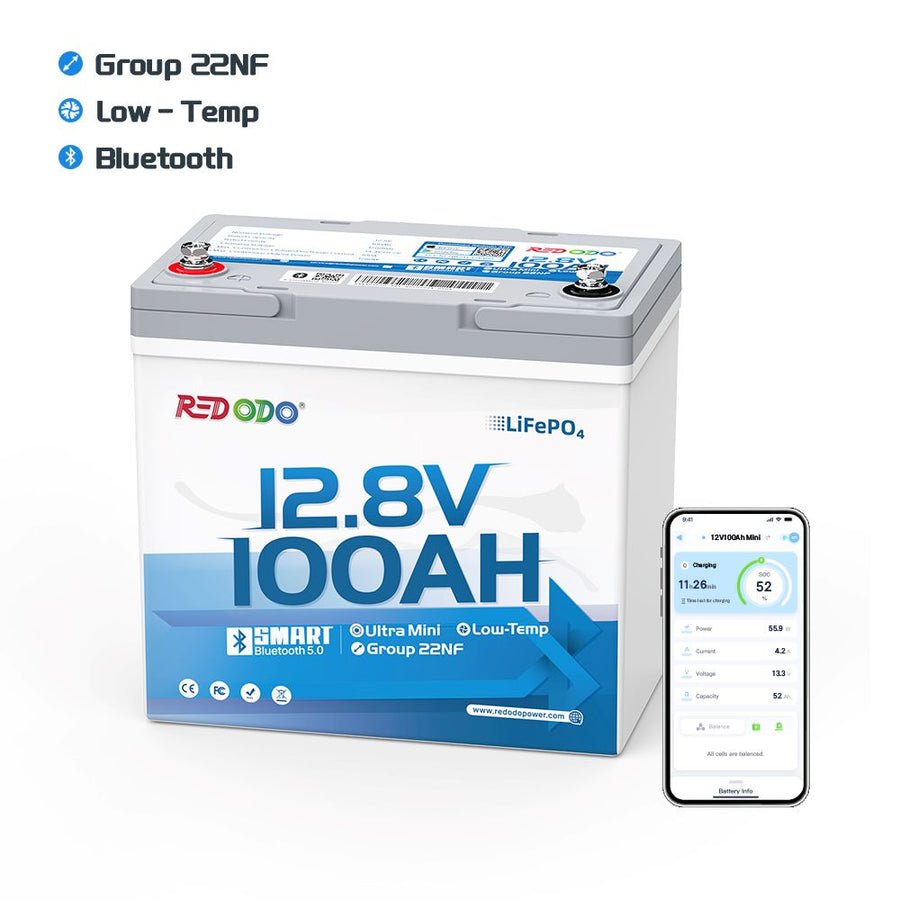 100Ah Ultra-Mini Bluetooth | VS | 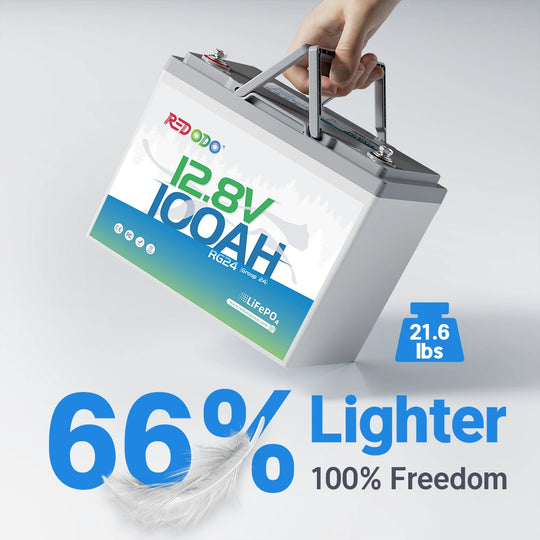 100Ah Group 24 Basic |
|---|---|---|
AE-A14114B-07 | Model number |
FE-A14114N-0A |
1,280Wh (12.8V, 100Ah) | Rated energy |
1,280Wh (12.8V, 100Ah) |
9.02 × 5.43 × 8.19 in | L × W × H |
10.24 × 6.61 × 8.30 in |
100A | BMS rating |
100A |
Included | Bluetooth monitoring |
Not included in this Basic model |
Yes; recovery at battery temperature 41°F | Low-temperature charging protection |
No |
20A | Recommended charging current |
20A |
| Check availability | Check availability |
Measure the compartment before choosing
Your pre-purchase fit check
-
Measure the usable space
Write down the tray length and width and the closed-compartment clearance. Include the space needed by terminals and cables; comparing case height alone leaves that question unanswered.
-
Check how the battery will be secured
Ask whether the existing restraint holds the proposed case correctly. A smaller battery can still require a different approved restraint. Do not choose solely because it passes through the compartment opening.
-
Identify every charging source
List the shore-power charger, solar controller and alternator charging equipment by exact model. Ask the installer to confirm their settings and suitability for the selected battery, rather than assuming an RV lithium setting settles every requirement.
For another case-size example, see our Vatrer Group 31 RV battery checks. Compare your installation requirements, not just the names on the cases.
Treat cold-weather charging as a separate decision
If your compartment can become too cold, ask how the actual battery temperature will be monitored and charging prevented outside its limits. Resolve that question before ordering the Basic. Read our cold-weather backup battery guide for further shopping context, then verify the exact battery manual rather than transferring another model’s features.
The same capacity does not settle runtime
Keep fit, protection and energy as separate decisions
Use a three-line decision record before ordering: fit—actual compartment, restraint and cable clearance checked against the exact case; charging—every source and battery-temperature limit confirmed; load—required current and energy checked separately. Write the document or installer confirmation next to each line. A smaller case solves only the first question, and a charging cutoff does not establish a heater.
If you are comparing a different design that actively warms before charging, see the LiTime Group 24 self-heating explanation. It describes a different battery and charging process; its heater conditions do not apply to either Redodo model here.
Make the choice around a solved constraint
- Compare case dimensions against the actual compartment.
- Confirm the full charging system and battery-temperature limits.
- Select the exact model shown in the table, not a similarly named variant.
Shortlist the Ultra-Mini when its smaller case, monitoring and documented charge protection address your needs. Shortlist the Basic when the fit and charging checks are already resolved and its current checkout cost makes sense for you. If either installation question remains unanswered, pause the purchase and obtain the exact-model confirmation first.
Specifications and feature distinctions: Redodo Ultra-Mini Bluetooth and Redodo Group 24 Basic, US listings checked October 8, 2026. These are documentation sources; use the product buttons for the current store offer.