BLUETTI Elite 30 V2 Power Lifting: What the 1,500W Claim Means
VibePicks may earn a commission if you buy through links on this page, at no extra cost to you.
The BLUETTI Elite 30 V2 is a 600W power station. Its 1,500W Power Lifting claim describes the rated size of certain compatible resistive appliances, not a new continuous output limit. The US manual explicitly says actual output remains 600W. That distinction matters before you pack a heater, kettle or other appliance for a trip.
US model: three numbers that mean different things
What Power Lifting actually changes
Think of the mode as a restricted way to operate a suitable load within the station’s available power. It does not turn this compact battery into a regular 1,500W supply. A device with a larger nameplate rating may operate differently from how it does on a wall outlet; the headline number alone cannot tell you whether the result will be useful.
BLUETTI limits the mode to pure resistive devices in the stated rating range, and the manual says it is disabled by default. An appliance’s purpose is not enough to classify it. A heater can include a fan or electronic controls, while a kitchen appliance can have a motor alongside its heating element. Check the exact appliance documentation and ask the manufacturers when the load type or permitted supply is unclear.
Power Lifting does not increase actual AC output beyond 600W. Do not assume that every appliance below 1,500W is compatible, or use this mode to justify a motor, compressor or sensitive electronics load.
Start with the appliance, not the headline
Write down the appliance’s running input, any starting requirement, and the supply conditions its manufacturer allows. Then compare those requirements with the station’s normal rating. For multiple AC loads, use their combined requirement: the 600W specification is a total, not an allowance for each socket.
For a fridge or another compressor appliance, this is a different decision from powering a simple resistive element. A modest running figure can hide a larger starting demand. Power Lifting’s resistive-load restriction gives you no basis for overlooking that startup requirement. Our kitchen-appliance power checks explain why matching the load comes before choosing a battery capacity.
The battery is still only 288Wh
A higher appliance rating does not add stored energy. As a hypothetical upper-limit calculation, 288Wh divided by a constant 600W is 0.48 hours, or 28.8 minutes. That assumes every nominal watt-hour reaches the appliance and ignores conversion losses, the battery reserve and the station’s own consumption. It is not a measured runtime and should not be used as a guaranteed operating time.
Another useful planning example is a 600W draw lasting five minutes: 600 × 5 ÷ 60 = 50Wh before losses. Four such sessions would require 200Wh before losses. The arithmetic helps you see how repeated short uses compete with everything else in your day, but it does not predict an appliance’s heat output or time to finish a task.
Keep power compatibility and energy budgeting as separate checks. A load can fit the output rating yet use too much energy for the planned duration. Once you have a suitable combination, our power-station runtime log helps you record actual consumption and conditions instead of treating a brochure estimate as a test result.
Carry two separate checks into your trip plan
Record the exact appliance, its permitted supply, whether the proposed mode is documented for that load, and the energy used per session. Keep an unknown load type marked unconfirmed rather than treating its nameplate watts as approval. Repeated short uses still need a daily energy budget.
Recharging is a separate input-side decision: use the Elite 30 V2 solar-input and 28V limit guide to check the intended panel and cable. Power Lifting changes neither that input check nor the battery’s stored energy.
When this compact station makes sense
The Elite 30 V2 deserves consideration when you want a small energy reserve and your actual loads fit its normal limits. The lifting mode is a conditional extra feature, not the main reason to choose it. If your central requirement is a device that needs a genuine continuous supply above 600W, choose a station with a documented normal output rating that covers that requirement and enough energy for the duration.
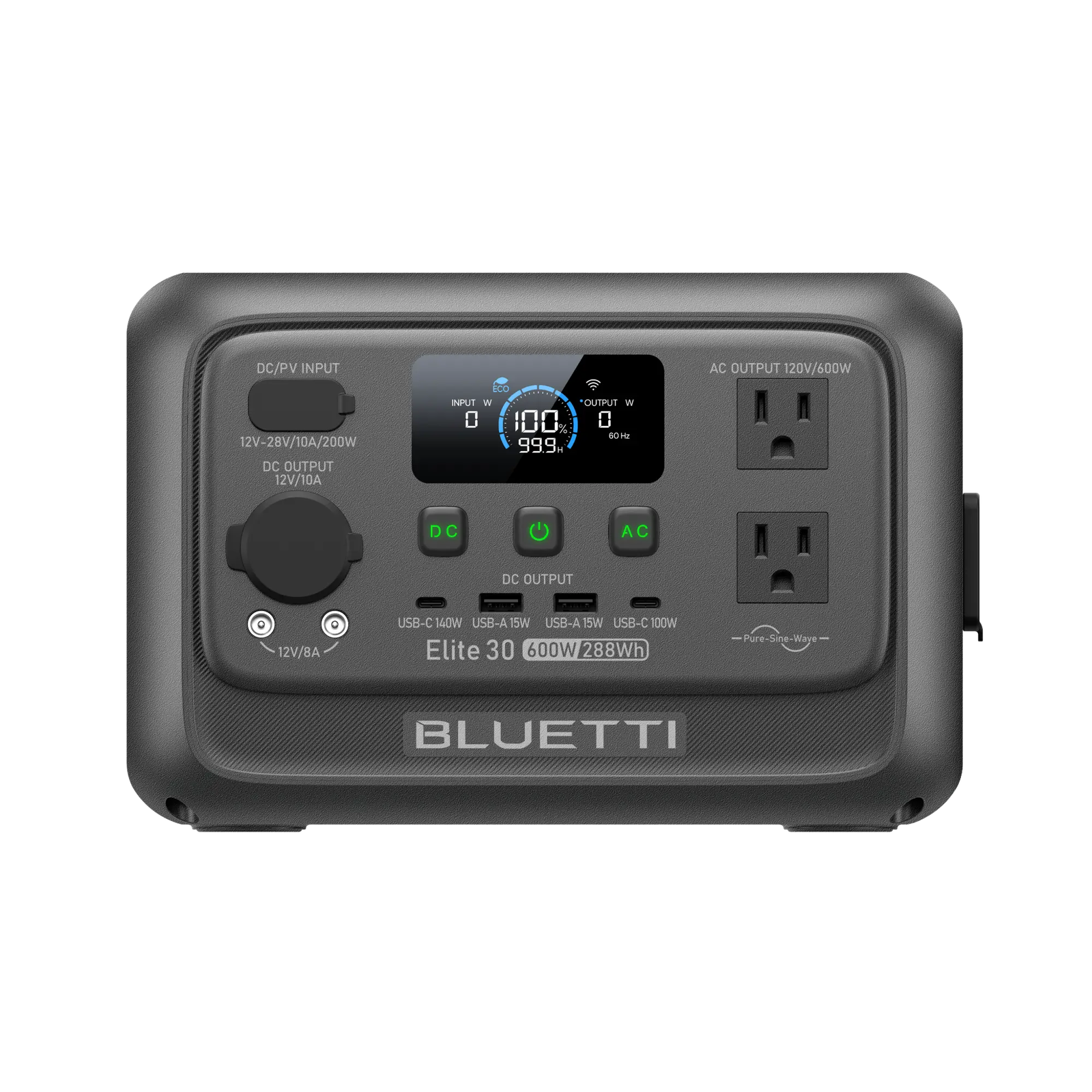
288Wh nominal capacity and 600W rated AC output. Check the exact appliance requirements before relying on Power Lifting.
The US Deep Grey variant was available in the official store when checked on October 13, 2026. Check the current price and purchase terms before ordering; this guide does not promise a coupon discount. The product card refers to the US model, so do not substitute a different region’s socket or electrical specifications.
Primary reference: BLUETTI Elite 30 V2 US user manual, particularly Power Lifting Mode (section 5.3) and the technical specifications. This is a documentation-based guide; VibePicks has not conducted a hands-on test of this model.