EcoFlow DELTA 3 Plus Solar Input: Why 1,000W Means Two Ports
VibePicks may earn a commission if you buy through links on this page, at no extra cost to you.
Think 500W per input first
The US EcoFlow DELTA 3 Plus reaches its advertised 1,000W solar ceiling through two inputs. One input is limited to 500W. A larger panel label does not turn one socket into a 1,000W connection.
This guide explains the limits for the DELTA 3 Plus, model EF-DL-H10-4. It is a document-based planning guide, not a hands-on charging test. Check the model label before applying these numbers to a different DELTA 3 version.
The input envelope
| Solar inputs | 2 |
| Maximum per input | 500W |
| Combined solar maximum | 1,000W |
| Input voltage | 11–60V DC |
| Input current | 15A per port |
The official DELTA 3 Plus user manual is the technical reference. It also sets array open-circuit voltage and short-circuit current limits of 60V and 15A. Treat those electrical checks separately from the wattage headline. A connector that fits is only one part of compatibility.
What the two-port total actually means
Consider three deliberately simplified examples. They describe input power at the station, not the nameplate rating of panels and not results we measured. If one input receives 300W and the other is unused, the combined input is 300W. If the two inputs each receive 300W, their sum is 600W. If one receives 500W and the other 100W, the sum is still 600W.
That last example explains the buying decision: unused capacity on the second input does not change the first input’s published limit. To plan around the full combined ceiling, you need suitable provision for both inputs. It does not follow that every owner needs enough panels to chase that ceiling.
For a weekend trip, start with the energy you expect to replace between uses. Extra panels can add packing, setup and positioning work. A smaller compatible arrangement may meet your daily needs even though its peak power is below the station’s maximum. Keep the panel budget and the energy budget on separate lines in your plan.
Four checks that matter more than a headline
- Identify the exact panel
Write down its model, rated power, open-circuit voltage and short-circuit current. Use its own manual and the manufacturer’s temperature guidance. Do not use the working-voltage number as a substitute for open-circuit voltage.
Look forA complete specification sheet for the exact version.AvoidBuying from a wattage-only listing. - Validate each input arrangement
Ask the panel or station manufacturer to confirm the intended arrangement against every input limit. Our six solar-panel compatibility checks help organize the questions.
Look forA documented match for each input.AvoidAssuming extra watts make excessive voltage acceptable. - Check the cable and package contents
The manual identifies a Solar to XT60i charging cable, sold separately. Confirm the required cable and the contents of the exact package before ordering. The base unit and a solar bundle are different purchases.
Look forThe correct documented cable and connector arrangement.AvoidAssuming a pictured panel or cable is included. - Record what happens in your location
Once using an approved setup, log input power, time, weather and battery level. Compare repeated observations using our power-station test log instead of treating one favorable reading as a daily guarantee.
Look forA repeatable record for your own use.AvoidConverting peak watts into promised all-day energy.
EcoFlow’s US store listed the base DELTA 3 Plus as shipping in mid-November. That is not immediate delivery. Its banner excludes Puerto Rico, Hawaii and Alaska. Confirm the current variant and delivery estimate before ordering. No SKU-qualified coupon or price is promised here.
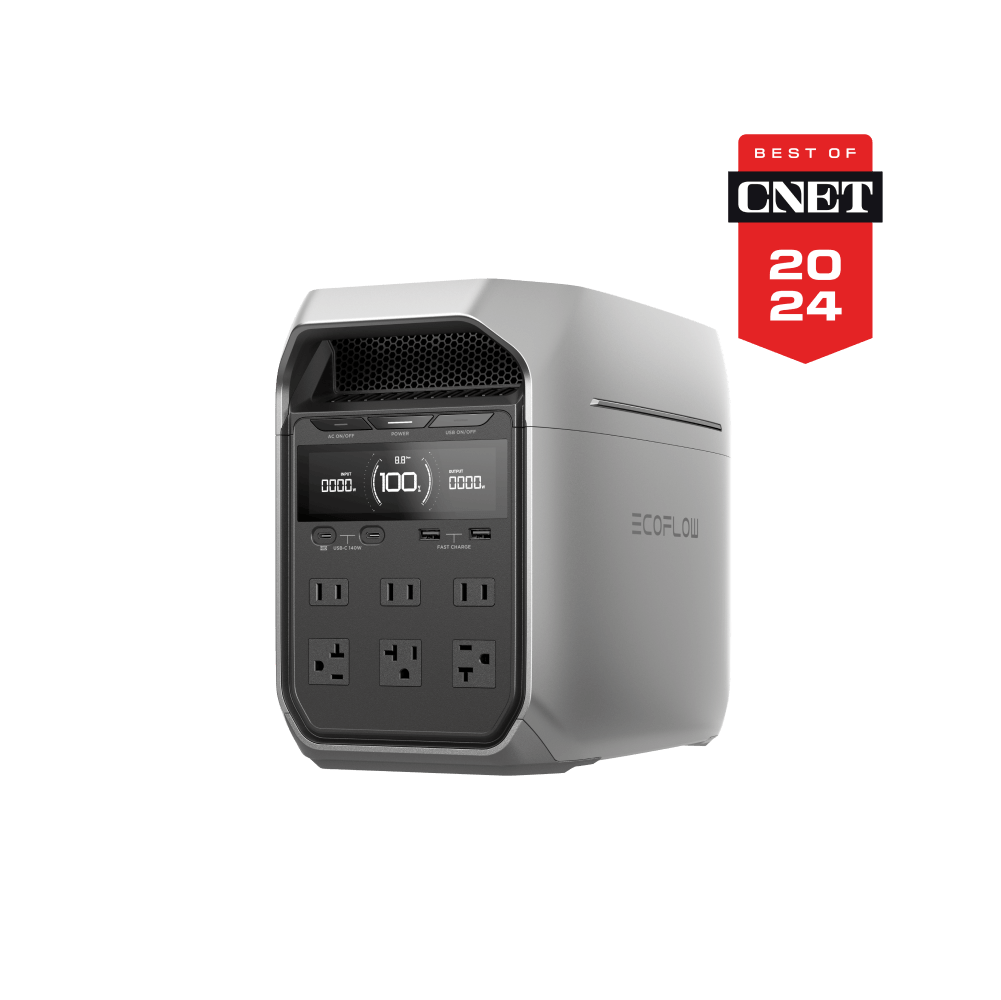
Check the current delivery estimate
A reference for the exact station discussed above. Solar panels and charging accessories depend on the package selected.
Choose the setup around the job
The useful question is how much charging opportunity your routine provides. If the station will sit in good light for several hours, peak input may matter less than placement and a compatible panel you can actually transport. If charging time is short, investigate both inputs before spending on more panel capacity.
Use 500W per input and 1,000W combined as design ceilings, not a charging-speed promise. Resolve voltage, current, cable and package questions first; then choose the amount of solar that fits your energy needs and delivery timeline.