LiTime 14.6V 20A Charger: How Long to Recharge 100Ah?
Start with the amount of charge you need to replace
A 20A charger gives a simple planning baseline: replacing 50Ah takes 2.5 hours at a constant 20A; replacing 100Ah takes five hours. Those are ideal calculations, not guaranteed times to a finished charge.
This guide uses the current US LiTime 12V (14.6V) 20A LiFePO4 charger as a documented example. It is a specification-based guide, not a hands-on test. The useful question is whether the battery, charger and time available fit your actual recharge plan.
VibePicks may earn a commission if you buy through links on this page, at no extra cost to you.
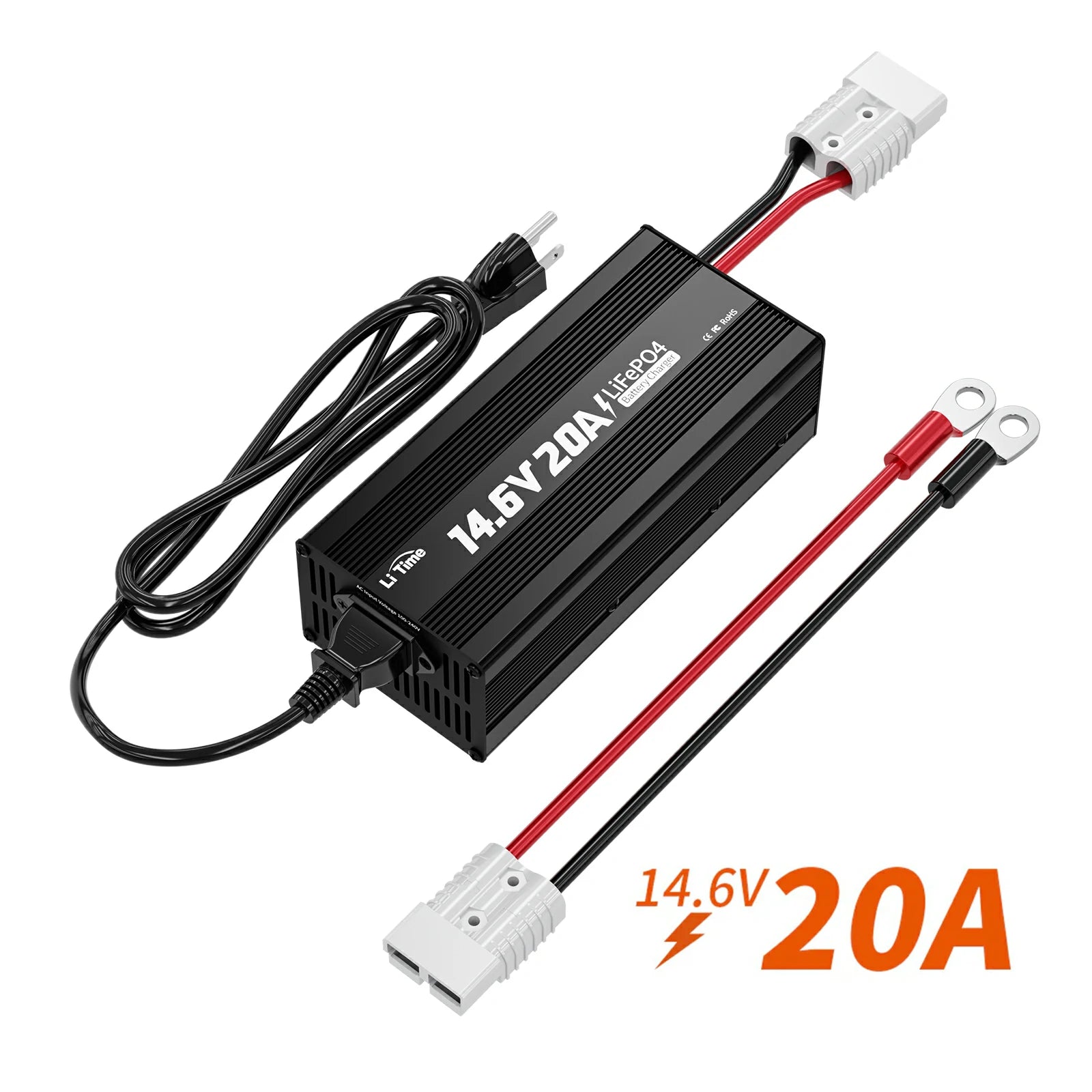
A documented 20A charging example for compatible 12V LiFePO4 batteries. Confirm the exact battery requirements before buying; the current US listing offered purchasing on October 8, 2026.
The charger specifications that matter here
| Output voltage | 14.6V |
| Output current | 20A |
| AC input | 100–240V, 50–60Hz |
| Charging stages | Pre-charge / constant current / constant voltage |
Use amp-hours to estimate the bulk charging window
Three ideal planning examples for a 100Ah battery
The examples omit charging losses, any current taper, pre-charge time and other active loads. LiTime documents multiple charging stages, so constant-current arithmetic does not describe the entire session. Do not deliberately discharge a battery to zero to reproduce an example. Use its instructions and a verified charge indication, not a stopwatch, to decide when charging is complete.
Work backward from the time you actually have
Questions to resolve before choosing this charger
-
Match the exact battery requirements
Check the battery manual for chemistry, charging voltage, permitted current and temperature limits. A shared nominal 12V label does not settle compatibility. Ask the battery manufacturer about the proposed charger if any requirement is unclear.
-
Check the battery temperature separately
LiTime lists a charger operating range of −4°F to 104°F. That describes the charger; it does not authorize charging a battery below its own temperature limit. Resolve cold-compartment charging before relying on the setup.
-
Choose the intended environment
The product listing says this charger is not waterproof, is not for marine use and is not for lead-acid batteries. Follow the exact charger manual for placement, ventilation, connections and operation; do not transfer instructions from a different charger.
Our Redodo RV battery comparison explains why case fit and temperature protection are separate shopping checks. The Vatrer Group 31 checklist offers another exact-model example; neither guide establishes charger compatibility for your battery.
No eligible public consumer coupon was found in the current merchant promotion check. The US product page displays sale pricing, but this guide omits prices and discount percentages because they can change. Check the current offer and delivery terms on LiTime’s store; no checkout redemption has been tested.
Choose around a realistic recharge window
- Estimate the amp-hours actually missing.
- Treat the constant-current result as a planning baseline.
- Verify the exact battery and charger manuals.
Use the ideal calculations to identify whether 20A is even plausible for your schedule, then allow for the actual charging process. Buy only after the battery requirements and intended environment are resolved. If your window is already shorter than the arithmetic baseline, change the plan before counting on a completed recharge.
Specifications, intended use and current store status: LiTime 12V 20A charger US listing. Operating instructions: manufacturer user manual. Checked October 8, 2026. The recharge examples are our declared calculations, not measured performance.