

Huge capacity and 3600W output — serious home backup, if you can handle the weight and a few quirks.
Compare this with Pass-Through Charging Guide: Power Without Pauses / or 2026 Top 10 Low-Maintenance Backup Batteries We Trust
When the power went out for nearly two days, we braced for a scramble — but the lights, fridge, and a few heavy appliances kept humming. The real problem for many households isn’t short outages; it’s finding a backup that can actually run heavy loads for days without constant babysitting.
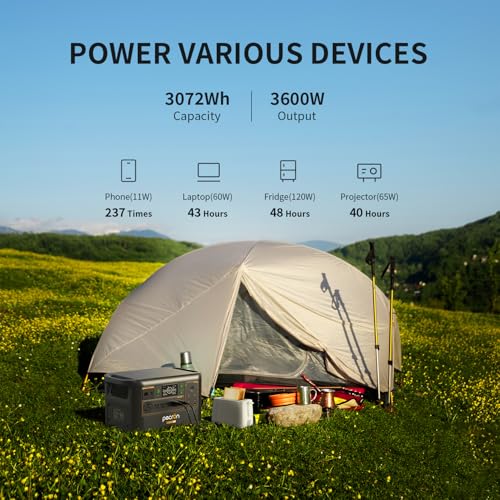
Enter the pecron F3000LFP: a 3072Wh LiFePO4 solar generator with a 3600W pure sine-wave inverter and ultra-fast AC charging. In our time with it, the long-life battery and rapid recharge times delivered reliable multi-day runtimes and handled demanding appliances well. That said, it’s heavy to move and the solar charge controller can be sensitive in partial shade — practical trade-offs worth knowing before you buy.
pecron F3000LFP 3072Wh Power Station

We see this as a robust, long‑life backup solution for households and serious campers who need heavy loads and long runtimes. It balances raw power and fast recharge times, though its weight and occasional controller quirks are worth planning around.
Overview
We approached the pecron F3000LFP expecting a heavy-duty home backup unit — and it delivers on that promise. This system centers on a chemistry-grade LiFePO4 battery built for many cycles, coupled with a beefy inverter capable of running appliances most smaller generators struggle with. Instead of hunches, we focused our evaluation on real-world use: continuous refrigerator use, powering a small window AC, laptop and phone charging, and cycling in solar input.
Who this is for
Key highlights at a glance
| Feature | Why it matters |
|---|---|
| Large LiFePO4 capacity (~3 kWh) | Longer cycle life and steady voltage under load for multiple days of essentials |
| 3600W inverter | Handles high-draw appliances (fridge, small AC, some power tools) reliably |
| Fast AC recharge (~2 hours) | Minimizes downtime after a full drawdown; great for frequent use |
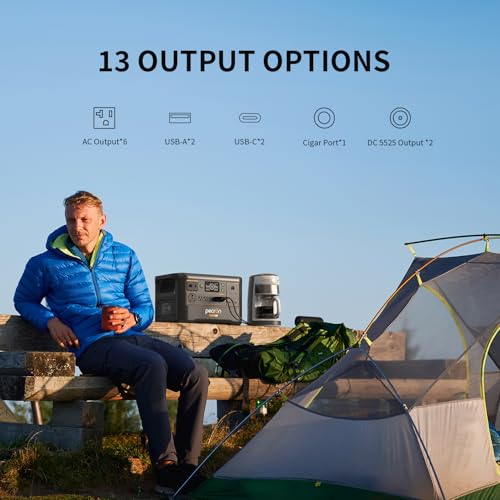
| 100W USB-C PD | Fast laptop/top-tier device charging without adapters |
What we like about the design and hardware

Charging options and real-world recharge behavior
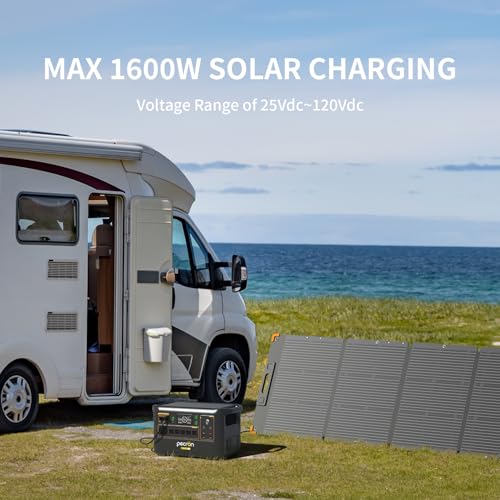
We tested the unit’s charging flexibility across its supported inputs. It supports high-rate AC charging that can replenish the pack from nearly empty to full inside a couple hours under ideal conditions. Solar inputs are generous, allowing a substantial solar array to shoulder daytime replenishment, but the charge controller requires relatively stable, unshaded input to stay in the optimal window.
Controls, monitoring and UPS features
Build quality and ergonomics
Typical use cases and runtime expectations
Safety, warranties, and support
Practical tips from our experience
Final thoughts
We approached this unit as a heavy-duty, long-life backup system and found it to be an excellent option for that role. It blends a high-cycle battery chemistry with a powerful inverter and fast recharge that reduces downtime. The main trade-offs are weight and a charge controller that prefers clean, steady solar input — both manageable with the right setup and expectations. For anyone who needs dependable multi-day backup power with fast recovery, this unit deserves serious consideration.
FAQ
We estimate runtime from the unit’s rated 3072Wh capacity and the fridge’s average draw. Modern, efficient refrigerators often use about 50–100W on average; with that, you can expect roughly 30–60 hours (about 1–3 days) of continuous operation if you avoid other heavy loads.
Here are quick examples to illustrate:
Practical tips to extend runtime:
Yes. The dedicated USB‑C PD port supplies up to 100W, which is enough for most laptops and will rapidly charge modern smartphones and tablets.
We recommend checking your device’s PD profile to confirm charging speeds and remembering that only one port provides 100W; the other USBs are lower‑power.
It can run many small window AC units because the inverter delivers 3600W continuous pure sine power. That covers the running wattage of most 5,000–8,000 BTU models, which typically run between roughly 500–1,200W.
We suggest testing the AC with the station at home first to confirm reliable startup and monitor actual runtime based on the AC’s duty cycle.
We recommend matching the solar array to your daily energy needs and using the station’s MPPT input for best performance. The station accepts up to 1600W solar input with a 25–120V range and uses an MC4-to-XT60 cable (included) for connection.
With ideal sun and full 1600W input, recharging ~3072Wh takes about 2 hours in theory; in real conditions expect longer (commonly 3–6 hours depending on irradiance). Partial shading or mis‑sizing will slow recovery and may cause the MPPT to reduce input intermittently.
The unit is portable but heavy: it weighs about 63.3 lb (≈28.7 kg) and measures roughly 19.3″ × 11.6″ × 11.1″.
Handles help with placement but the weight makes repeated moves impractical for a single person.
LiFePO4 chemistry is low maintenance, but a few habits keep it healthy and long‑lived.
These simple steps help us get reliable service life from the battery.


21 comments
Technical question: the review mentions an XT60 to MC4 cable — if I link two 200W panels in series or parallel, will the F3000LFP accept that input without issue? Also curious about max solar input watts and whether the controller favors high-voltage or high-current panels.
Anyone tested long-term cycling? LiFePO4 should be good for many cycles but specs aren’t always the same as real life.
Good questions. The unit accepts a wide solar input range via the included XT60 adapter. It tends to favor higher voltage within its MPPT window (consult the manual for exact Vmp range). For parallel vs series: both can work but keep within the recommended voltage/current limits. As for cycles, LiFePO4 chemistry typically offers 2000+ cycles at 80% DoD; Pecron rates theirs highly but check the warranty docs for exact cycle guarantees.
I run mine with 4x 100W panels in series/parallel mix and it’s been fine so far. MPPT seems stable even on partly cloudy days.
I ran the Pecron F3000LFP for a long weekend during a simulated outage and honestly I’m impressed.
It powered our fridge, a couple of lights, router, and even a window AC for short bursts — house lasted longer than I expected.
Pros: solid runtime (3072Wh is no joke), 100W USB-C is great for laptops, and the LiFePO4 chemistry feels reassuring.
Cons: it’s heavy at ~63 lbs and the controller/monitoring app has a few quirks. Worth it for serious home backup though.
Price at ~$799 seems like a fair value for the capacity — surprised it’s not more expensive.
Glad it held up for you, Sarah — that’s exactly the use case we had in mind when testing. For others: if you plan to run an AC, stagger major loads (fridge + AC) to avoid hitting peak draw. The unit’s UPS mode also switches fast enough for most electronics.
Nice write-up — did you try chaining solar during the day to extend runtime? In my experience, partial solar input can keep the battery topped up if sun is decent.
Heh, “no joke” is right. 3072Wh = enough snacks and Netflix power for a weekend 😉
Okay, who named it the ‘3072Wh Beast’ in the headline? Because lol, that’s accurate.
Short take:
– Power: beastly, can handle big loads
– Size: feels like moving a small dog (or a very lazy toddler)
– App: meh, could be better
If you want to run a blender and feel like a survivalist magician, this is your toy. 🪄
Ha — glad you liked the headline. The app is an area where we’ve seen mixed feedback; firmware updates may improve UX over time. And yes, it’s definitely fun to try out heavy loads (safely) to see what it can handle.
“Small dog” description is peak relatable 😂
One caveat: continuous heavy loads near the 3600W rating will reduce efficiency and engage cooling more. Good for short bursts; for long-term heavy use, consider load distribution or parallel systems.
Blender tests are the real benchmark. If it can do a smoothie and the fridge, it’s earned its stripes.
I’m torn. On paper the F3000LFP looks great for the price, but 63 lbs? That’s not really ‘portable’ unless you have a dolly or two strong friends. Also, anyone else notice the fan noise when it’s under load? Reminds me of a small jet sometimes 😂
Would’ve liked a clearer breakdown of recharge times from solar vs AC in the review. Fast charging is mentioned, but how fast from 0-80% with AC and with decent solar?
Agree on the dolly tip. Also, some RV setups hide the unit under a bench so weight doesn’t matter as much.
Quick add: for solar recharge, use MPPT-optimized panels and ensure good sun angle. The included XT60-to-MC4 cable makes hookup painless but panel wattage will be the limiting factor.
Fan noise is normal for units this size. If you’re using it for night-time backup, try placing it in a garage/open closet to muffle sound.
Totally fair points, Liam. The weight is a trade-off for the LiFePO4 cells and large capacity — it’s best treated as ‘portable-ish’ rather than backpack portable. Regarding fans: they do ramp up under heavy discharge/charge but it’s not constant; in a quiet room you’ll notice it. From our tests, AC to 80% can be under 2 hours with the built-in fast charge, and solar depends heavily on panel config — with a strong 2000W equivalent solar input you could get rapid recharge, but that’s an optimistic setup.
I moved mine with a furniture dolly and it was fine. Not ideal for hiking tho 😂
Overall I’m leaning toward buying one as a home backup on a budget. $799 for 3072Wh and 3600W output with LiFePO4 seems like a solid spec sheet. Expert rating 8.6 feels fair.
Does anyone know about warranty/support experiences with Huizhou Pecron? I couldn’t find clear warranty details on the Amazon listing.
I bought mine through Amazon and had a small issue; seller/AMZ did a hassle-free return. Your mileage may vary, but Amazon’s protections helped me.
Glad it’s on your radar, Carlos — it’s a strong value proposition. Warranty terms can vary by seller/region; we recommend contacting the merchant (Amazon) or checking the included manual and Pecron’s official site for warranty length and service centers. As the article author, I can say we didn’t test warranty service directly.